


Book and Catalog Binding – Types and Features
No matter whether a catalog is A5 or A4 format, or whether a book is thick or thin, they all share one key element – binding. What kinds of book binding are available and what makes them different? Below you’ll find the most popular binding types used by Papillon – printing house in Kraków.
Saddle Stitch Binding
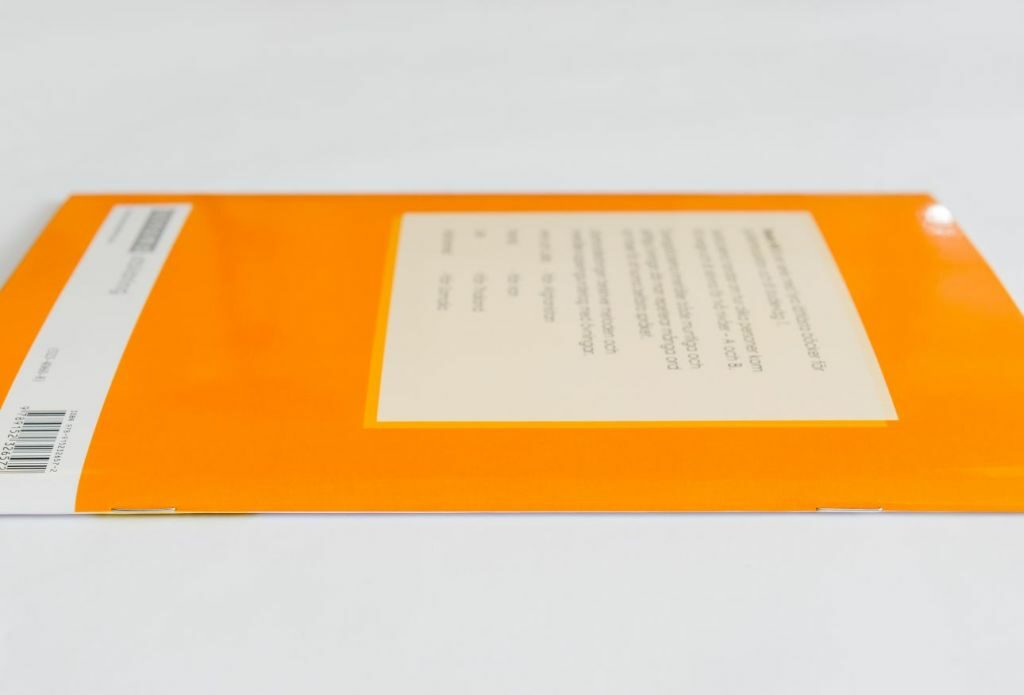
This is probably the most familiar binding method from our school days. Many of us used notebooks bound with metal staples – this is saddle stitch binding, commonly called wire stitching. It is one of the most economical solutions in the printing industry. It can be used for brochures in sizes ranging from A6 to A4. The recommended page count is between 8 and 80. However, when working with the maximum number of pages, we suggest using low paper weight, such as 65–70 g.
Hotmelt Perfect Binding
After saddle stitch, hotmelt binding is the most popular option for catalog binding and softcover books. This is because it is both cost-efficient and fast to produce. It allows us to bind publications from 60 to 200 pages, creating a clean, flat spine. For thicker volumes, we recommend additional reinforcement with thread or using a more durable and flexible adhesive, such as PUR glue.

PUR Perfect Binding
PUR binding is similar to hotmelt binding, but the key difference lies in the strength and flexibility of the adhesive. It is ideal for books and publications that will be frequently used, such as textbooks. Publications bound with PUR glue are more durable and flexible, which significantly extends their lifespan.

Sewn Perfect Binding
When a publication contains a large number of pages, thread sewing can strengthen the structure and add an elegant finish. Threads are used in volumes exceeding 100 pages to improve durability and give the book a premium look. Although this method is not the cheapest, it offers exceptional quality. As shown below, the pages are grouped into blocks and sewn along the spine.

Spiral Binding
Some clients require a binding method that prevents the book or catalog from closing on its own. Spiral binding is the perfect solution. By joining the pages with a metal spiral, the publication stays open and lies flat, which is extremely convenient. Thanks to the wide range of spiral sizes, even large volumes can be bound. For demanding projects, we also offer various spiral colors to match your brand.

Hardcover Sewn Binding
For premium publications, we recommend hardcover sewn binding. This method is designed for top-quality books with no compromises. The cover is made from solid board, typically 2.5 mm thick. It is wrapped with printed and refined cover paper to ensure an elegant appearance. Inside, the cover is lined with 120 g offset paper, and the book block is sewn and glued, guaranteeing strength and durability.
Contact us to find the best book binding option for your catalogs, books, and premium publications.
